
Why Design-Build Planning Is Becoming a Smart Investment for California Homeowners
In California’s increasingly complex residential construction market, homeowners are learning that the most expensive part of a building project is often not the construction itself—but the inefficiencies that happen long before the first foundation is poured.
Unexpected permit revisions, fragmented communication between architects and contractors, repeated plan modifications, and budgeting inaccuracies can quietly turn a promising home improvement or custom build into a costly, delayed undertaking. As inflation continues to affect material pricing and labor availability across the state, property owners are becoming more selective about how early-stage planning is handled.
This shift is fueling a growing interest in design-build planning as a strategic financial decision rather than simply a design preference.
Instead of separating architectural drafting, permit preparation, interior planning, and contractor coordination into disconnected stages, more California homeowners are opting for integrated planning systems that reduce operational waste from the very beginning.
The financial logic is straightforward: every revision avoided before permitting saves exponentially more money during construction.
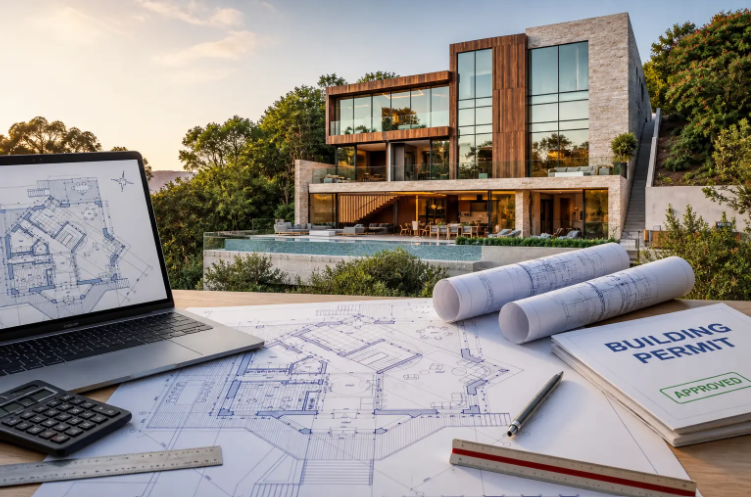
The Hidden Cost of Traditional Residential Planning
For decades, many homeowners approached remodeling, custom home construction, accessory dwelling unit development, or property expansion in a linear way—first hiring a designer, then submitting plans for revisions, then approaching contractors, and finally adjusting documentation to meet field realities.
While this process remains common, it often produces three major financial problems:
Repeated drafting and redesign fees
When contractors discover that submitted plans do not align with realistic site conditions, engineering constraints, or municipal code nuances, revisions become inevitable.
Permit delays that extend carrying costs
Every additional week spent waiting on approvals can increase mortgage pressure, rental displacement costs, financing expenses, or delayed occupancy returns.
Construction change orders
One of the largest budget killers in residential projects occurs when incomplete planning decisions force mid-build changes.
For California homeowners—particularly in competitive urban regions such as Los Angeles—these inefficiencies now represent a far greater financial risk than the upfront design fee itself.
Why Integrated Design-Build Planning Reduces Financial Exposure
The modern design-build planning model addresses these losses by consolidating the earliest project decisions into one coordinated framework.
When site feasibility, drafting documentation, permit-readiness, interior functionality, and construction practicality are reviewed simultaneously, homeowners gain a far more realistic understanding of project cost before physical work begins.
This matters because today’s residential projects involve far more than aesthetics.
A successful home build or remodel now requires:
zoning compliance,
city submission standards,
construction sequencing,
utility considerations,
structural compatibility,
long-term resale positioning,
and increasingly, energy-conscious planning.
Firms that combine these disciplines under one umbrella are allowing clients to make fewer expensive assumptions.
Many Los Angeles homeowners are now turning to integrated specialists such as Ataman Studio design team for this exact reason—using permit-conscious drafting and coordinated design-build preparation to reduce approval friction and improve budget predictability across the full project lifecycle.
Rather than producing isolated concept drawings, integrated planning teams approach the residential asset as a complete operational investment.
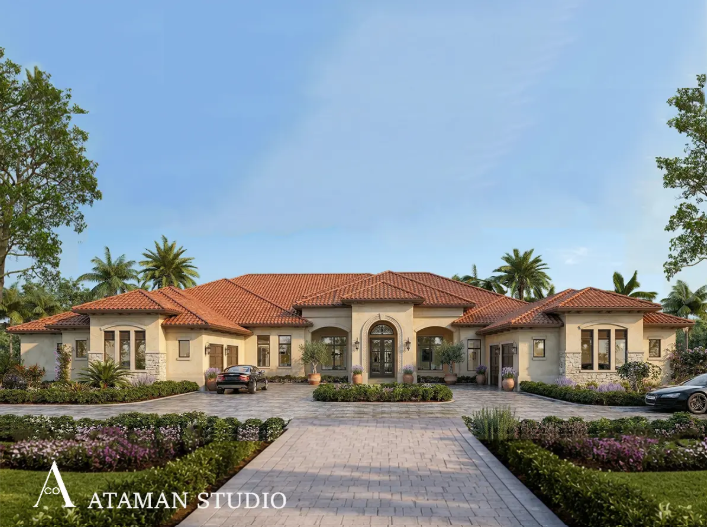
Residential Construction Is No Longer Just a Lifestyle Decision
One of the biggest market changes in California is that home improvement is increasingly being treated as a capital strategy.
Property owners are not simply asking:
“How will this house look?”
They are asking:
Will this ADU generate rental income faster?
Will this remodel improve appraisal value?
Will permit approval timelines affect financing?
Will the construction scope stay within forecast?
Will the resale premium justify the build?
This investor-like mindset has transformed how planning services are evaluated.
A custom home, detached ADU, garage conversion, major renovation, or interior redesign is now tied directly to:
equity enhancement,
income generation,
family expansion planning,
or portfolio-level property optimization.
That means the planning stage must serve both architectural and financial objectives.
Poorly coordinated residential plans can undermine return on investment before the project even enters construction bidding.
Permit-Ready Documentation Is Emerging as a Competitive Advantage
Across California municipalities, permitting has become one of the least predictable components of residential development.
Code compliance standards continue to evolve. Local jurisdictions increasingly request more complete submittal packages, clearer technical detailing, and stronger documentation consistency.
For homeowners, this creates a hidden vulnerability:
beautiful design concepts often fail under municipal scrutiny if they are not drafted with submission logic in mind.
Permit-ready planning is therefore becoming one of the strongest forms of pre-construction risk management.
It reduces:
resubmission cycles,
consultant back-and-forth,
approval ambiguity,
and contractor idle periods.
In financial terms, this translates into measurable savings in both time and capital deployment.
Companies focused on permit-first residential workflows, including Ataman Studio, are seeing growing demand from Southern California property owners who increasingly understand that regulatory readiness is no longer an administrative detail—it is part of the investment equation.
Why Los Angeles Homeowners Are Shifting Toward Full-Service Coordination
Los Angeles remains one of the most active but operationally challenging residential markets in the country.
Between lot restrictions, hillside regulations, ADU opportunities, neighborhood-specific compliance requirements, and premium labor costs, fragmented project management exposes homeowners to far greater inefficiency than in simpler suburban regions.
As a result, clients are placing higher value on teams that can manage:
feasibility assessment,
custom drafting,
floor planning,
3D visualization,
remodeling design,
permit preparation,
and construction transition support inside one continuous system.
This level of coordination significantly reduces the communication gaps that traditionally exist between designer, permit consultant, and builder.
And in today’s environment, communication failure is often what creates financial overrun.
The more disconnected the early planning process is, the more likely the homeowner will pay for uncertainty later.
Planning Efficiency Now Impacts Final Build Cost More Than Ever
Material volatility and labor shortages have changed the economics of residential construction.
When field crews are waiting on plan clarifications, when subcontractors receive incomplete dimensions, or when approved plans require practical amendments after mobilization, the homeowner absorbs not only direct revision expenses but also scheduling disruption across the entire contractor chain.
This is why front-loaded planning efficiency now has compounding financial value.
Every decision solved on paper is dramatically cheaper than a decision solved in the field.
Industry professionals increasingly note that homeowners who invest in coordinated drafting and design-build preparation experience:
fewer contractor RFIs,
lower change-order frequency,
more accurate bid comparisons,
and faster transition from permit to active construction.
These are not merely convenience advantages.
They are budget protection mechanisms.
The Future of Residential Building Is Strategic, Not Reactive
California homeowners are entering a market where residential construction can no longer be managed casually.
Whether the goal is long-term family occupancy, rental income, or property appreciation, the margin for planning inefficiency has narrowed significantly.
As costs rise, municipalities tighten, and timelines stretch, the smartest projects are no longer defined by who builds first—but by who plans with the least friction.
Design-build planning is becoming less of an optional premium service and more of a financial shield against avoidable project loss.
For homeowners treating their property as a serious capital asset, that distinction may ultimately define whether a residential project creates value—or simply consumes it.